


Revolutionizing Data Centers: How GM and Redwood Materials are Giving EV Batteries a Second Life
In a world where technology is advancing at an unprecedented pace, the demand for data centers to store and process massive amounts of data is constantly growing. These facilities are the backbone of our digital world, supporting everything from social media to e-commerce to cloud computing. However, with this growth comes a significant energy consumption and environmental impact. This is where the partnership between General Motors (GM) and Redwood Materials comes into play, aiming to revolutionize the way data centers are powered with the use of electric vehicle (EV) batteries.
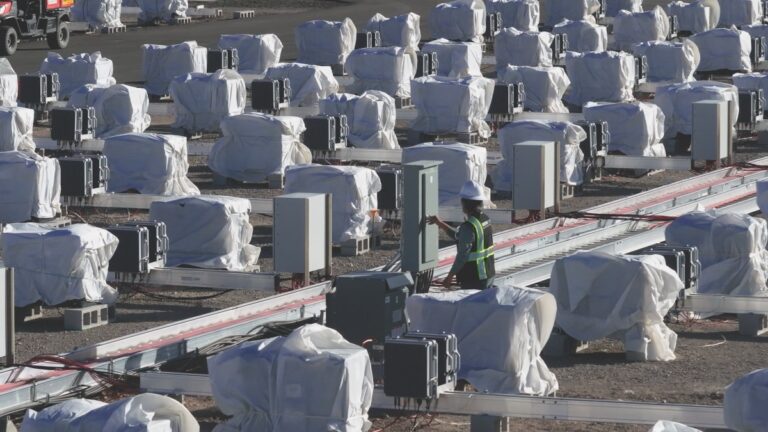
On July 16, 2025, GM announced their collaboration with Redwood Materials, a Nevada-based startup founded by former Tesla executive, JB Straubel. The partnership will see GM supplying retired EV batteries to Redwood Materials, who will then repurpose them into energy storage systems for data centers. This innovative approach not only reduces the carbon footprint of data centers but also gives a second life to EV batteries that would otherwise end up in landfills.
According to a report by the International Energy Agency, data centers are one of the fastest-growing consumers of electricity, accounting for around 1% of global electricity consumption. With the increasing demand for data storage, this number is expected to triple by 2025. This is a concerning trend, as data centers are estimated to produce more carbon emissions than the entire airline industry. Therefore, the need for sustainable solutions to power these facilities is more critical than ever.
The utilization of retired EV batteries is a game-changer in the world of data centers. These batteries, which are no longer suitable for EVs, still have significant energy storage capacity that can be harnessed for other purposes. By repurposing these batteries, not only are we reducing the amount of electronic waste, but we are also utilizing a valuable resource that would have otherwise gone to waste.
But how exactly will these batteries power data centers? Redwood Materials will use a process called “direct recycling,” which involves breaking down the batteries into their component materials and then repurposing them into energy storage systems. This process significantly reduces the carbon footprint of data centers, as it eliminates the need for the extraction and processing of raw materials to manufacture new batteries. This also lowers the cost of production, making it a more economically viable option for data center operators.
Aside from the environmental benefits, this partnership also has significant economic advantages. The use of retired EV batteries can potentially save data center operators millions of dollars in energy costs. According to Redwood Materials, their recycled battery packs have a 10-15 year lifespan, which is significantly longer than traditional lead-acid batteries used in data centers. This means that data centers can reduce their energy costs while also contributing to a more sustainable future.
This collaboration between GM and Redwood Materials is not their first venture into sustainable initiatives. GM has been at the forefront of the EV revolution, with their Chevy Bolt being one of the best-selling electric cars in the US. They have also committed to making their operations carbon neutral by 2040. Similarly, Redwood Materials has been working towards a circular economy, where materials are continuously reused and recycled, reducing the need for new resource extraction and minimizing waste.
This partnership is a prime example of how the automotive and technology industries can work together to create more sustainable solutions. By repurposing retired EV batteries, GM and Redwood Materials are not only reducing the carbon footprint of data centers but also contributing to the circular economy.
The use of retired EV batteries for data centers is just the beginning. As the EV market continues to grow, the number of retired batteries will also increase, providing a steady supply of energy storage systems for data centers. This also opens up possibilities for other applications, such as residential and commercial energy storage systems, creating a more decentralized and sustainable energy grid.
Moreover, the partnership between GM and Redwood Materials also highlights the importance of collaboration between different industries. The automotive and technology sectors have different expertise and resources that, when combined, can lead to innovative solutions to the world’s most pressing issues.
In a world where technology is constantly evolving, sustainability must be at the forefront of every industry. The partnership between GM and Redwood Materials is a step in the right direction towards a more sustainable future. By giving retired EV batteries a second life, they are not only reducing the carbon footprint of data centers but also paving the way for a circular economy. This is a win-win for both the environment and the economy, making this collaboration a game-changer in the world of data centers.
Referência:
Clique aqui
