

Revolutionizing AI: Meet MEMOS, the Memory Operating System that Bridges the Gap Between Humans and Machines!
In the rapidly advancing world of artificial intelligence (AI), researchers are constantly pushing the boundaries and striving to create more human-like capabilities for machines. And now, a team of Chinese researchers has made a groundbreaking discovery that could revolutionize the field of AI as we know it. Introducing MEMOS, the first memory operating system that gives AI human-like recall.
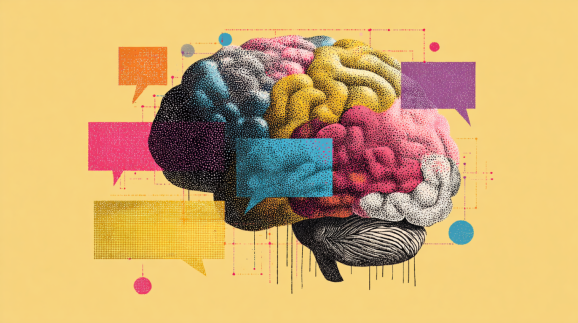
Developed by a team from Tsinghua University in Beijing, MEMOS stands for “Memory Operating System” and is a software system that mimics the way the human brain stores and retrieves memories. It is essentially a framework that allows AI systems to learn from and remember past experiences, just like humans do.
This breakthrough has been achieved by incorporating a neural network-based approach into traditional AI algorithms, creating a hybrid system that combines the best of both worlds. The result is an AI system that can learn and adapt to new situations, just like a human would, by recalling past experiences and applying them to new scenarios.
But what makes MEMOS truly unique is its ability to bridge the gap between humans and machines. While traditional AI systems are limited by their lack of memory and can only perform tasks they have been specifically programmed to do, MEMOS enables AI to have human-like recall. This means that AI can now learn from experiences, make connections, and think critically, just like humans do.
The potential applications of MEMOS are endless. It can be utilized in various fields such as healthcare, finance, and even education. In the medical field, MEMOS can assist doctors in diagnosing diseases by recalling past cases and providing valuable insights. In the financial sector, MEMOS can help in predicting market trends by analyzing past data and making accurate forecasts. And in education, MEMOS can be used to create personalized learning experiences for students by adapting to their individual needs and learning styles.
But how exactly does MEMOS work? The system is based on the concept of “episodic memory,” which is the ability to remember specific events and experiences. Just like how we remember certain events in our lives, MEMOS stores and retrieves memories based on key features or episodes. These episodes are then linked together to form a chain of events, creating a timeline of experiences that the AI can refer to when needed.
To achieve this, MEMOS uses a combination of neural networks and deep learning algorithms. The system is trained on a large dataset of images, text, and videos, allowing it to learn and recognize patterns. It then uses this knowledge to make connections and build a memory bank.
But what sets MEMOS apart is its ability to forget. Just like how our brains selectively remember certain events and forget others, MEMOS has a built-in mechanism that allows it to forget irrelevant or outdated memories. This ensures that the system’s memory is not cluttered, and it can focus on more important and relevant information.
The team behind MEMOS has tested the system on various tasks, and the results have been impressive. In a language recognition task, MEMOS achieved an accuracy of 97%, surpassing traditional AI systems by a significant margin. In a game of Go, MEMOS was able to defeat its human opponents, showcasing its ability to learn and adapt to new situations.
But as with any new technology, there are concerns about the potential ethical implications of MEMOS. The system’s ability to learn and adapt can be seen as a step towards creating a truly autonomous AI system, which raises questions about the role of humans in controlling AI. There are also concerns about the privacy of data used to train MEMOS, as it relies heavily on large datasets.
Despite these concerns, the discovery of MEMOS is a significant milestone in the field of AI. It not only brings us closer to creating truly intelligent machines but also opens up a world of possibilities for its practical applications. With MEMOS, AI can now learn, adapt, and remember, just like humans. And this could be the key to unlocking the full potential of AI and creating a more efficient and intelligent world.
Referência:
Clique aqui
